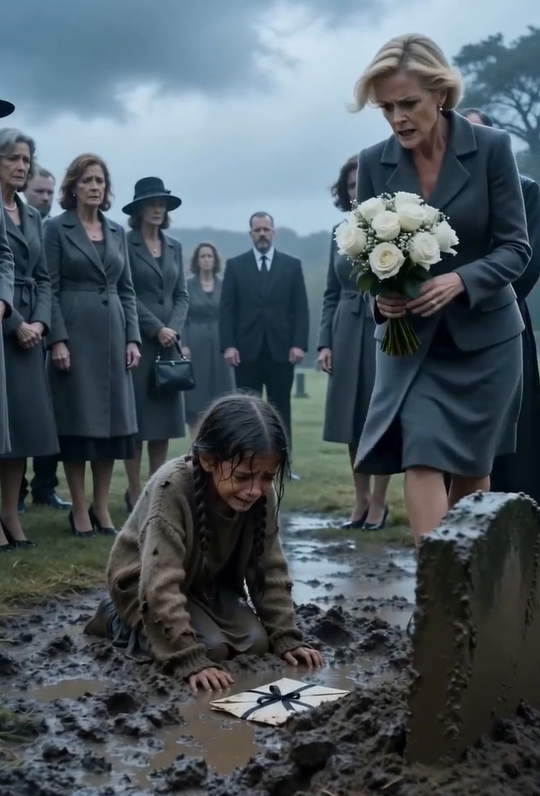
No one moved. The wind slammed hard against the umbrellas while the priest stood frozen beside the coffin, the ribbon trembling in his hands. In the mud at his feet, a little girl remained kneeling, clutching a broken flower to her chest as if it were the last thing she had left from her mother. The widow was the first to break the silence. “This means nothing,” she snapped too quickly and too sharply. “A cruel joke. Nothing more.” But the priest was barely listening to her. With trembling fingers, he pushed aside the funeral flowers and uncovered a second hidden engraving beneath the main plaque on the coffin. It carried the child’s name — the daughter’s name — and it matched the one stitched inside the ribbon the little girl had brought.
Shocked whispers spread through the crowd. Through tears, the child looked up and quietly whispered, “My mother said if the name was already there, it meant he knew the truth before he died.” The priest closed his eyes as though the words were unbearable to hear. For years, the man they were burying had publicly mourned only one child, yet now the coffin itself revealed an entirely different truth: he had secretly acknowledged the existence of another daughter. A daughter the family had never spoken about. And now that daughter stood before them alive. The widow slowly stepped back. “No,” she said nervously. “That plaque was private.” But her words only made the silence heavier, because if the plaque had truly been hidden, the little girl could not have known that name unless her mother had told her.
The priest carefully unfolded the ribbon completely and discovered another inscription hidden inside the seam. His voice shook as he read the message aloud: “If they refuse to let my flower touch his coffin, tell them he carved our daughter’s name beside his heart before they erased both of us from the family.” Gasps of horror swept through the crowd. Every eye immediately turned toward the child, and people suddenly noticed what they had ignored before: the same eyes, the same chin, the same fragile expression that had belonged to the deceased man’s lost love many years earlier. Then the little girl reached into her torn coat and pulled out a small silver pendant covered in mud.
The priest gently cleaned the pendant and instantly turned pale again. It was part of the broken rosary beads the deceased had once worn every day before claiming they had been buried with another woman many years ago. The girl swallowed hard and quietly said, “My mother said he broke them in half the night he promised he would never leave us.” The crowd was no longer whispering. They were staring directly at the widow. One by one, everyone remembered the same disturbing truth: she had controlled everything — the funeral arrangements, the plaques, the flowers, even the sealed family records. She decided what the world would see and what would remain hidden forever.
The priest slowly turned toward her, horror filling his face. The widow instinctively stepped away from the coffin as panic slowly spread across her expression. And then, in a voice heavy enough to silence the entire cemetery, the priest asked the question that shattered the ceremony forever: “You struck this child not because she brought a lie… did you?” He paused briefly before speaking the final words. “You struck her because she brought back the daughter this family tried to bury in silence.”