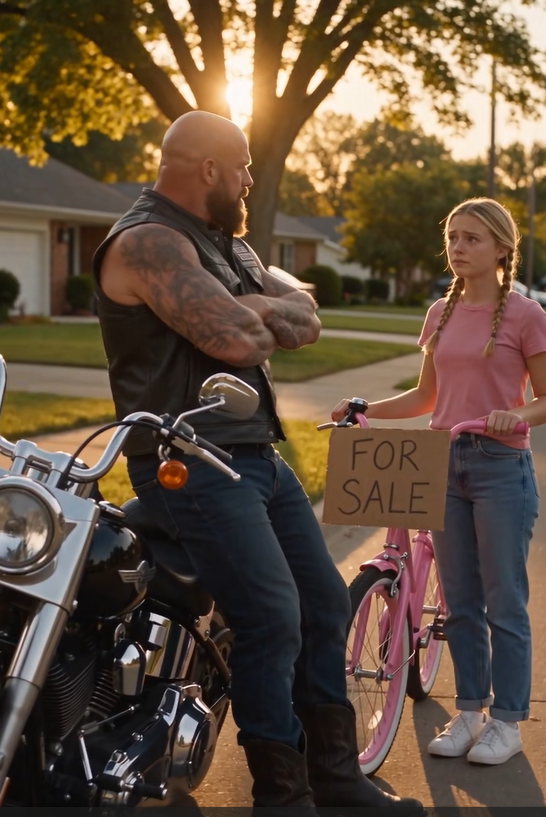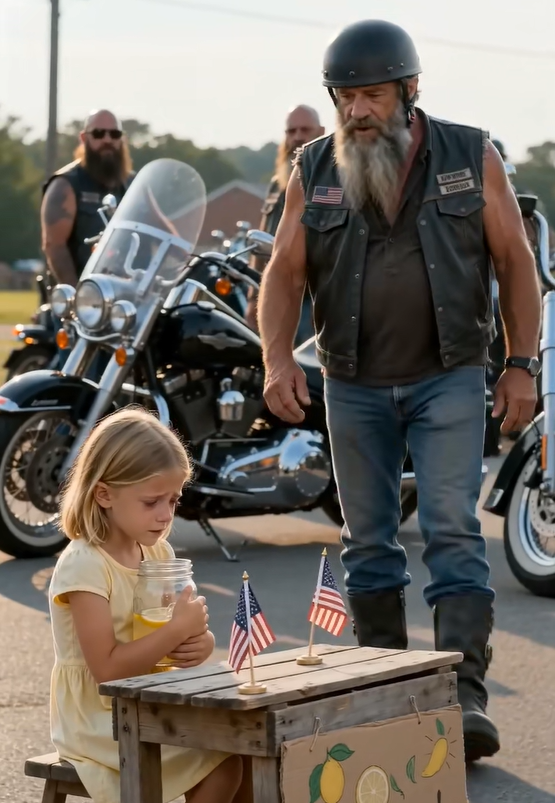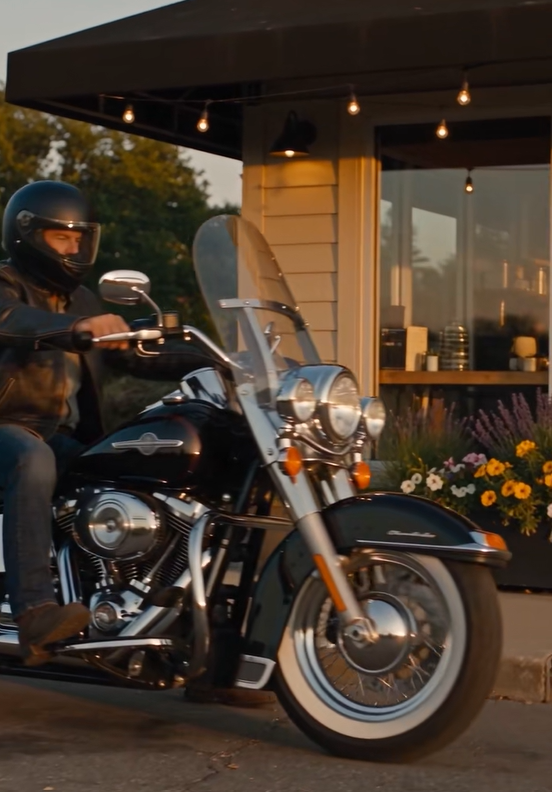
In Dawson, Ohio, the evening usually settled quietly: swings creaked on old porches, and the air smelled of dust, cut grass, and dinner from neighboring kitchens. But that day, shortly after five, that peace was cut open by the low rumble of engines. One after another, black motorcycles entered Maple Street — not fast, not defiantly, but slowly, as if every meter of road mattered. People came out of their houses, parted their curtains, and stood on their porches. At the front of the column rode a biker in a black helmet, his face covered, and behind him came dozens more. They stopped across from an old white house with peeling paint and a warm light glowing on the porch. The wind gently moved the chime beside the door, but no one came out from inside. And then all the bikers covered their faces at once.
Suspicion Was Born Faster Than the Truth
At first, no one said a word. Only the engines trembled in the dusk, reflecting in chrome and in the dusty windows of the houses. Then someone whispered, “They’re planning something.” A woman on the sidewalk lifted her phone and began recording. A man in a plaid shirt stepped back, as if afraid of being too close. Within minutes, the video was already spreading through the local group: “Bikers hiding their faces near a house,” “Someone is being threatened,” “Call the sheriff.” Fear quickly turned into certainty, even though no one knew anything yet. Still, no one came out of the house. A shadow moved behind the curtain, and that only made the tension stronger. When two patrol cars turned onto the street, the neighbors were already standing almost in a semicircle, waiting for something terrible to happen.
The Sheriff’s Question After Which No One Breathed
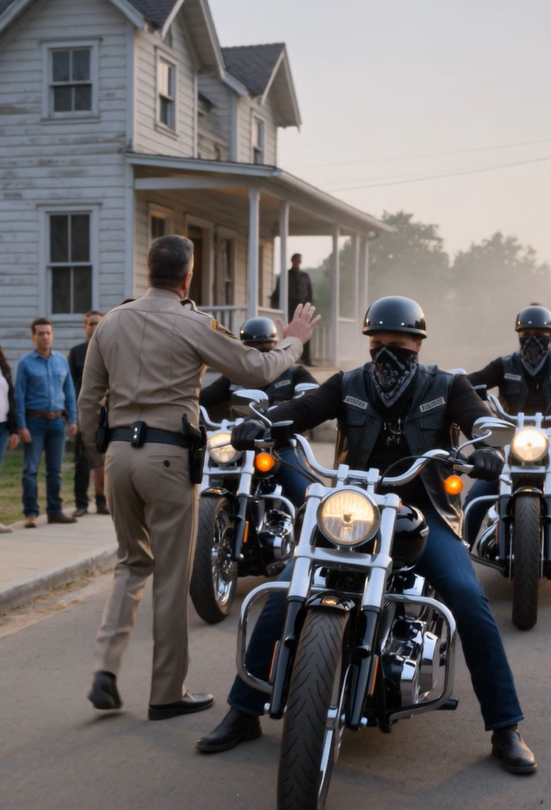
The sheriff stepped into the middle of the road and raised his hand. There was no panic in his movement, but his face had hardened. The front motorcycle stopped a few steps away from him, its headlight shining straight into the dusty air, turning the dusk into a golden haze. The biker removed neither his helmet nor his bandana. Behind him, the others sat motionless, like shadows arranged into a silent wall. Nearby stood a man in a faded blue shirt. He nervously shifted his gaze from the sheriff to the gray-haired biker with a rough face and heavy eyes. This older biker, whom everyone called Baker, held himself calmly, but there was something painful in his stillness. The sheriff looked at the covered faces and asked, “Explain what is going on here?” The street became so quiet that the creak of the old porch could be heard.
The Brother Everyone Was Waiting For
Baker slowly turned his head toward the white house. For a second, it seemed he would not be able to answer. His fingers tightened in his leather gloves, and his gaze darkened, as if he was looking not at the house, but into the past. Then he said, low and controlled, “We’re waiting for his brother.” The man in the blue shirt turned pale. He clearly did not understand why these people had come here, why they were silent, and why they were hiding their faces. He took a step closer and, unable to hold back, asked, “Why are all of you covering your faces?” The question hung between them like the last door before the truth. Several bikers lowered their heads. One turned away. Another gripped the handlebars tighter. Even the sheriff no longer looked certain, because he understood: what stood before him was not a threat. It was grief that had been held inside for too long.
The Reason the Street Stopped Judging
Baker raised his eyes. In them flashed what he had been trying to hide from the very beginning. He looked at the man in the blue shirt, then at the house, where behind the closed door someone could perhaps already hear every sound. His voice became quieter, almost hoarse: “We didn’t want them to see us crying.” No one answered. Phones slowly lowered. A woman on the porch covered her mouth with her hand. The sheriff lowered his hand and no longer stood like a barrier. It turned out the bikers had not come to frighten, threaten, or hide from the law. They had come to say goodbye to a boy whose older brother had once saved one of them on the road, and now could not return home himself. They covered their faces not out of shame and not out of anger. They covered them because beneath the black leather, helmets, and rough voices were people who did not want to destroy the family’s last hope with the sight of their own tears. And that evening, Maple Street remembered not the rumble of engines, but the silence after one sentence.