Morning at Riverside Diner in downtown Chicago usually looks the same: gray November skies, cold wind, the familiar chime over the door. But that calm shattered in seconds when manager Gregory Walsh snapped at a man standing at the counter. He looked homeless—tired eyes, salt-and-pepper beard, a worn military jacket. But he wasn’t asking for money. He was asking for work in exchange for a meal.
Watching it all was waitress Destiny Harper. She’s 28, a single mother raising a six-year-old daughter, commuting on two buses every morning, constantly calculating how to cover rent, groceries, medication, and hospital bills. She’s learned to be quiet, agreeable, invisible—because losing her job would mean losing stability.
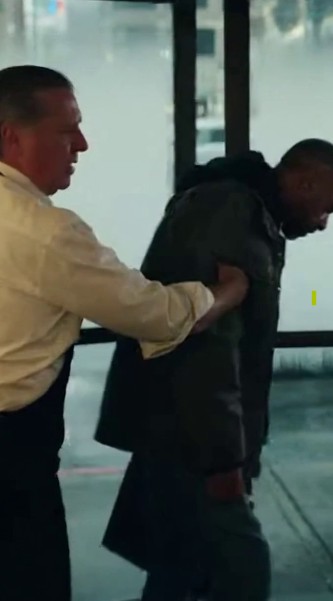
But when Walsh grabbed the man by the arm and started forcing him outside into the freezing rain, something inside Destiny snapped. She didn’t see a problem—she saw a human being barely holding on. And she said just three words: “Mr. Walsh, stop.”
The diner fell silent.
Walsh took it as open defiance. He ordered Destiny back to work, but she didn’t move. She said it plainly: asking to work for food isn’t begging—it’s dignity. That honesty cost her everything. Walsh coldly fired her on the spot. Five minutes to get out.
Destiny could have apologized. She could have backed down for the sake of her paycheck and her rent. Instead, she did the hardest thing—she stood by what was right. She pulled out the last money she had and placed a to-go order like any customer. With those final dollars, she bought the man a full breakfast: eggs, bacon, toast, coffee, juice. Not scraps. A real meal. Respect.
Then came the detail that made it hurt even more. When the man’s briefcase fell and papers spilled onto the floor, Destiny caught a glimpse of medical documents. Pancreatic cancer. Stage four.
That’s why his hands were shaking. Not just hunger. Not just cold.
The man introduced himself as Harrison Bennett. He looked at Destiny as if trying to memorize her face. He thanked her—not only for the food, but for seeing him as a person when no one else did. And he said something she would never forget: if she had a daughter, then she hadn’t lost everything. Because she had just shown what integrity looks like.
Destiny walked out into the icy rain wearing her soaked uniform, her job gone, her future uncertain. At home, reality hit hard—job searches, unpaid bills, rent closing in. She braced herself for weeks of struggle.
What she didn’t know was that while she was trying not to drown, Harrison Bennett was already making a call.
The “homeless man” wasn’t what he seemed. His phone, his posture, his briefcase—they didn’t match the image by accident. He had come looking for one thing: proof that real, selfless kindness still exists.
The next day, a message appears. A car is waiting downstairs.
And when Destiny steps outside, her breath catches.
A black Rolls-Royce is parked at the curb.
The man who was thrown into the rain the day before has returned—not as someone asking for help, but as someone with the power to change her life forever. And as Destiny is about to learn, he’s also racing against time—determined to spend what little he has left making sure one act of courage turns into something much bigger.