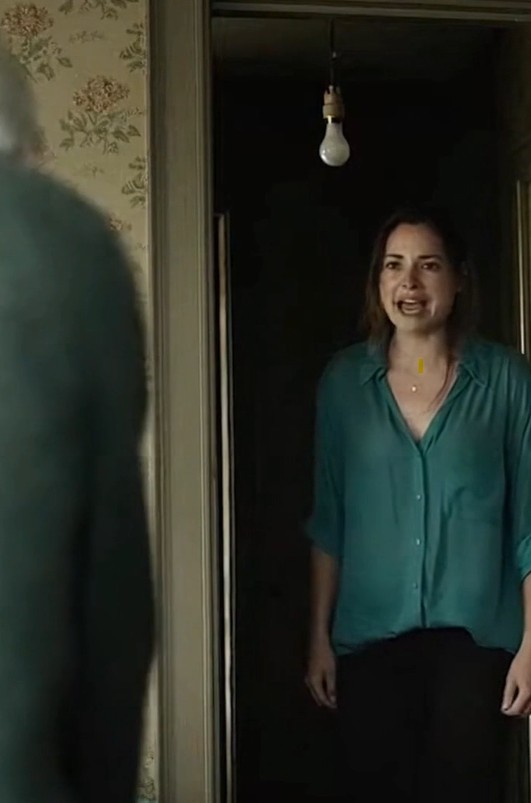
Kristina stood in the doorway of the tiny bedroom I had called home for the past three years. Arms crossed, lips tightly pressed—she no longer tried to hide her disgust.
— It’s decided, Guillermo. Get out. You can even die on the street, but you will not live under my roof another day. Mine. Not ours. And certainly not David’s.
With those words, she erased three years of my life—as if wiping chalk from a blackboard.
Three years during which I helped pay the bills from my modest pension. Three years of taking the grandchildren to school, cooking dinners, fixing doors, pipes, and tiles. Every sound of that house knew my hands. And all of it—for nothing.
I was seventy-four years old. A retired carpenter: fingers twisted by arthritis, a back bent by decades of hard labor. And now a woman I had known for only five years was throwing me out like a broken chair.
— Does David know about this? I asked calmly.
She didn’t even blink.
— Yes. We decided. We’re tired of supporting an old problem.
A problem.
I looked at her, trying to find even a trace of shame. Nothing.
— What problem have I caused? I asked quietly.
She burst out laughing.
— The fact that you exist. The house is small. Three bedrooms. David needs an office to earn real money for our children—not a shelter for a useless old man.
— I understand, I said.
That unsettled her.
— And that’s it? You understand?
— Yes. You want me to leave. I will leave.
— Fine. By tomorrow.
— I need at least a week.
— I don’t care. Tomorrow—or I’ll call the police and say you threatened me. Who do you think they’ll believe? You or me?
I nodded and quietly added:
— Just know this: tomorrow, a gift will arrive at your door.
She frowned.
— Are you insane?
— You’ll see. A special one.
That evening, I packed my entire life into two suitcases and three boxes: clothes, tools, books, Rosa’s photographs. In the morning, the moving truck arrived. I rented a damp studio for 450 euros a month—exactly what my pension allowed.
Kristina watched with obvious satisfaction as my belongings were carried out. David managed to say:
— Dad… it’s better this way.
— For whom? I asked. He said nothing.
At two in the afternoon, the phone rang.
— The package has been delivered. It was received by Kristina Santos, Mr. Ruiz reported.
— Proceed, I replied.
After that, the phone rang nonstop. I didn’t answer.
Later, David was shouting into the phone:
— What documents are these?! The ones saying you’re the owner of the house?
— Yes. They’re real.
— You bought the house?!
— Four years ago. With your mother’s insurance money. One hundred eighty thousand euros. You never asked.
I gave them thirty days. Thirty times more respect than they had given me.
Two weeks later, they moved out.
I sold the house. I donated the money to organizations that help homeless elderly people. For my grandchildren, I set up a fund—with conditions.
Sometimes I wonder if I was too harsh.
Then I remember her words.
And I understand: no.
Because family is not blood.
It is respect.
And broken respect always has a price.