She didn’t ask for sympathy.
She didn’t ask for attention.
She asked for food.
By the end of the night, the entire room was standing.
The piano at La Belle Verre had become a decoration years ago. Always polished. Always admired. Never played. It existed to impress, not to make music.
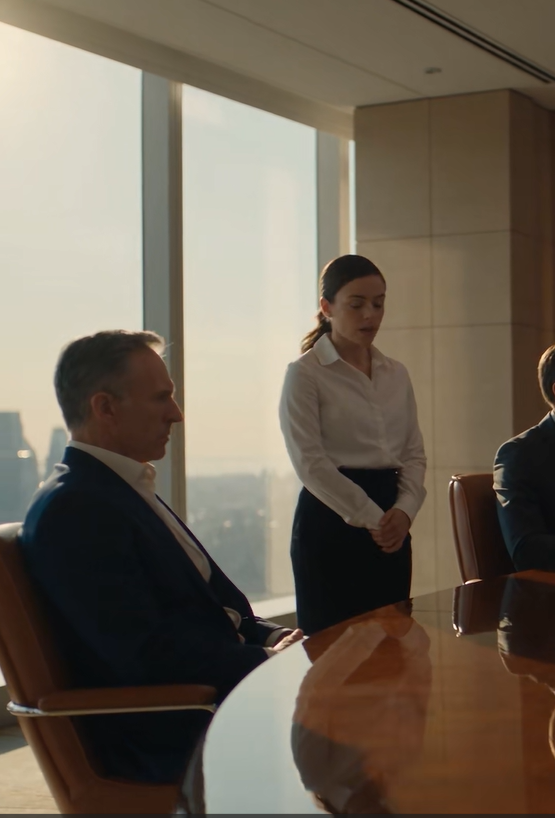
That evening, the restaurant overflowed with wealth. Men in perfectly tailored suits. Women whose diamonds caught the chandelier light with every movement. Confident voices filled the air.
And then there was Lena.
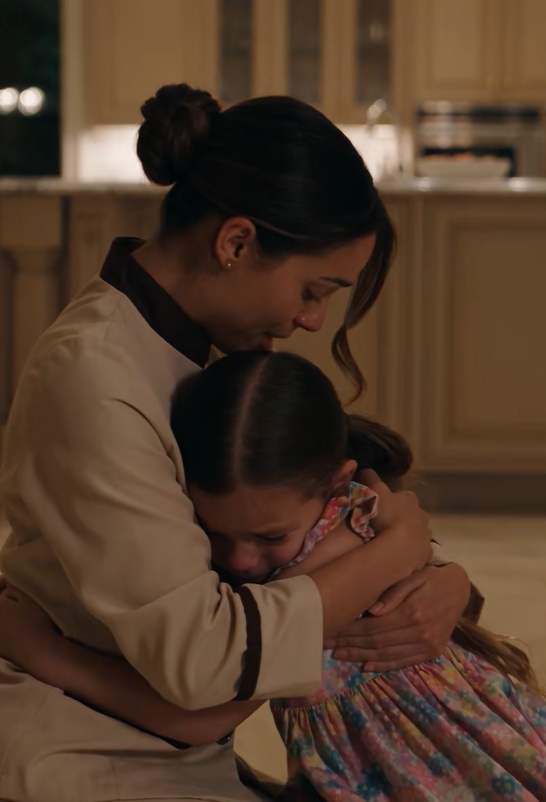
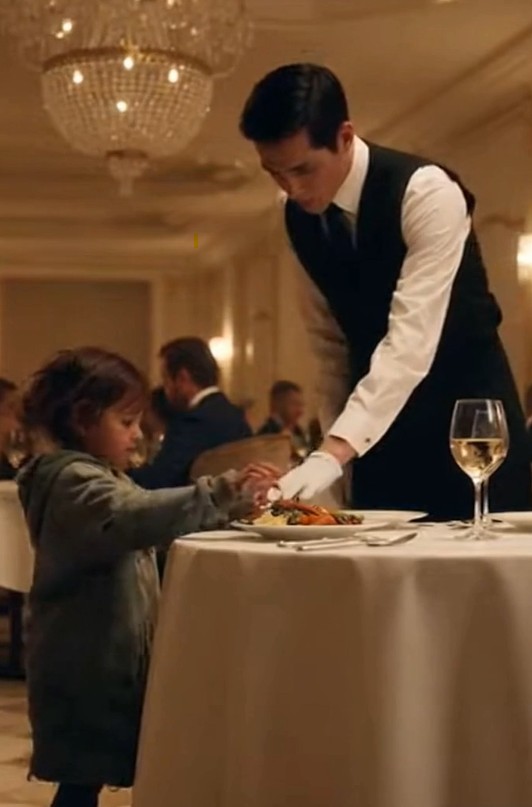
She was twelve. Fragile-looking. Her shoes were clearly too big, the soles nearly worn through. She didn’t walk like she belonged. She walked carefully, counting steps, as if one wrong move would send her back outside.
Her eyes weren’t drawn to the piano.
They followed the food.
A waiter passed with a steak so thick it released steam.
Lena swallowed hard.
A man in a charcoal suit stepped in front of her.
“This is a private event,” he said sharply.
“I’m sorry,” she whispered. “I just—”
“Where’s your mother?” he interrupted.
She paused.
“She’s working.”
Nearby, a woman leaned toward her friend.
“Why do kids like this always wander into places they don’t belong?”
Lena heard it. She always did.
Her gaze drifted past them — to the piano.
She stepped forward.
A hand stopped her.
“That’s not a toy,” the manager said with a tight smile. “You’ll damage it.”
Lena turned to him, her voice trembling but steady.
“If I play… can I eat?”
The room went still.
Someone laughed uncomfortably. Another guest shook his head.
“This isn’t funny,” a man muttered. “Is this a stunt?”
The manager crouched down.
“Do you know how expensive that piano is?”
She nodded.
“Yes.”
“You’ve played before?”
A brief hesitation.
“Only when no one is watching.”
The manager exhaled.
“One minute,” he said. “Then you leave.”
She didn’t hesitate.
Lena climbed onto the bench. Her feet dangled, not even touching the floor. Her fingers hovered above the keys.
“This is ridiculous,” someone whispered.
Then she played.
The first note didn’t demand attention. It breathed. Soft. Careful. Almost afraid.
Then another. And another.
Suddenly, it wasn’t a child playing.
It was hunger.
Cold mornings.
Long nights pretending not to hear your mother cry.
A woman near the bar gasped.
“Oh my God…”
Forks froze mid-air. Wine glasses stopped moving. The room fell silent.
Lena’s hands moved faster now — strong, confident, impossibly mature.
“She’s incredible,” someone whispered.
“Who teaches a kid like that?”
The answer came with the final chord.
Silence.
One clap.
Then another.
Then the entire room erupted.
People stood. Applause thundered against marble walls. The manager stared at her as if he were seeing a ghost.
“Where did you learn to play like that?” he asked.
Lena shrugged.
“My mom cleaned a music school,” she said. “They let me practice after hours… before turning off the lights.”
A woman pushed her chair back.
“Sweetheart, what’s your last name?”
“Carver.”
The woman went pale. She turned to the man beside her.
“Did you hear that?”
His glass slipped from his hand.
“No… that’s impossible.”
The room buzzed.
The woman looked back at Lena, her voice shaking.
“My brother was Daniel Carver. A concert pianist.”
Lena nodded slowly.
“He was my dad.”
Silence crashed down again — heavier than before.
“He died when I was six,” Lena continued. “But he always said, ‘Talent doesn’t belong to the rich. It belongs to the brave.’”
No one spoke.
The man who had stopped her earlier stepped forward, his eyes wet.
“I’m sorry,” he said quietly. “I was wrong.”
The manager cleared his throat.
“Someone… bring her dinner.”
Not scraps.
Not leftovers.
A full plate.
Lena stared at it like it might disappear.
Then she smiled.
And for the first time that night — she truly belonged.
If this story moved you,
share it with someone who believes talent should never be limited by money.
Comment if you think opportunity should belong to everyone.