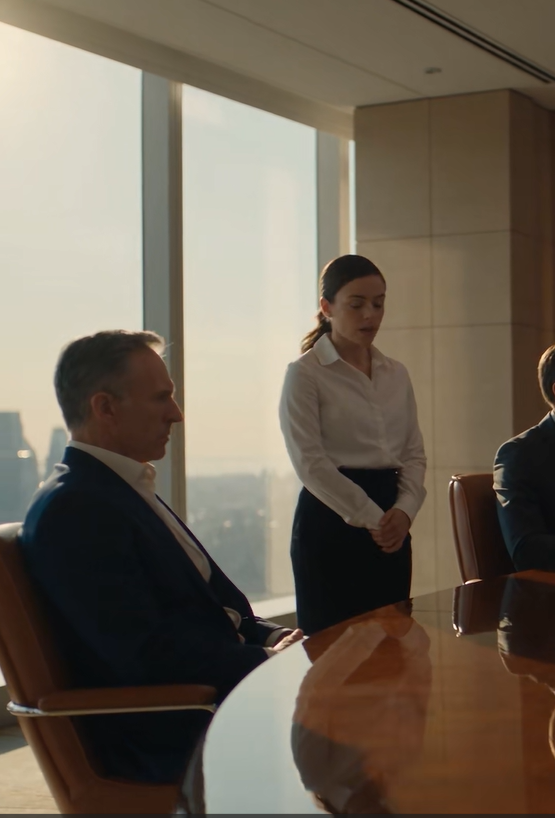
The office was alive with its usual rhythm—keyboards tapping, low conversations drifting, the steady hum of coffee machines working overtime. Sunlight flooded through towering windows, glinting off sleek desks and glass walls. It looked like the kind of place that bragged about being modern… inclusive… fair.
But that morning, something in the air felt off.
At one desk, a young woman sat frozen, her fingers resting on a notebook she hadn’t touched in minutes. Her shoulders were tight. She felt it before it happened.
Eyes on her.
Then the voice came.
“Stand up.”
Not loud—but sharp enough to cut through everything.
She didn’t move.
A few seconds passed. Too long.
“I said stand up.”
This time, louder. Deliberate. Meant for everyone.
The room shifted. People glanced up, then quickly back down. They all knew what was happening… and who was behind it.
She always arrived like a storm.
Right after nine. Heels striking the floor like a warning. Conversations died instantly when she passed. People avoided eye contact. Screens minimized in panic. She didn’t need to shout—fear spoke for her.
And now, she had stopped.
Right in the center aisle.
Her gaze locked onto one person.
The young woman slowly stood.
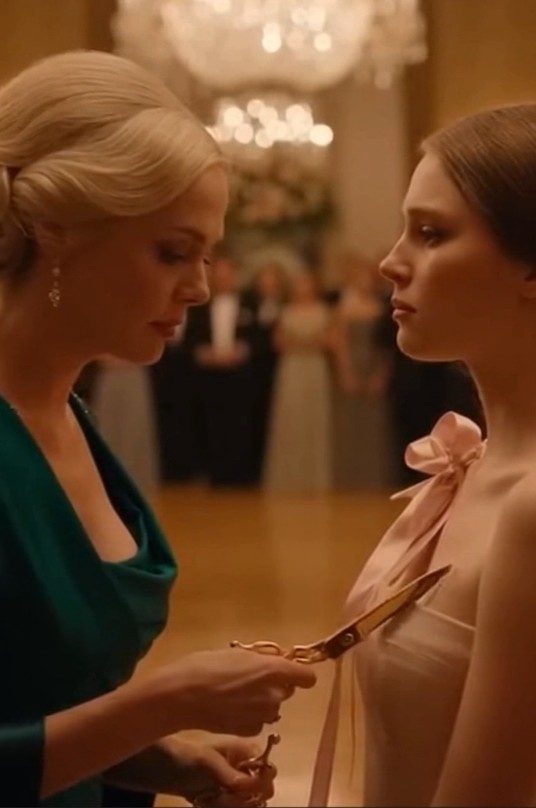
“What is that?” the executive asked, pointing at her blouse with a mocking tilt of her head. “Is that what you wear to a real job?”
The girl swallowed. “It’s within the dress—”
“Don’t interrupt me,” the executive snapped coldly. “You already take up enough space.”
The words hit harder than a slap.
People shifted uncomfortably. Someone pretended to be on a call. No one stepped in.
No one ever did.
The executive stepped closer—too close. Invading her space, lowering her voice just enough to feel personal… and cruel.
“Do you have any idea how replaceable you are?” she whispered. “I could have your access revoked before lunch.”
Then she reached for her coffee.
Hot. Fresh.
For a split second, it almost looked like an accident.
It wasn’t.
The cup tilted—just enough.
Coffee spilled across the desk, dripping down in slow, humiliating streaks.
Gasps filled the room.
“Oh my God…”
But the executive didn’t apologize.
She smiled.
“Careful,” she said lightly. “This job can be… overwhelming.”
The young woman stood there, frozen. The walls seemed to close in. The silence was suffocating.
“You should be grateful,” the executive added, straightening. “I kept you this long.”
And then—
Something changed.
The young woman laughed.
Just once.
Quiet. Controlled.
Enough to stop everything.
The executive frowned. “What’s funny?”
The woman looked up.
No fear now. Just calm.
“You’re very confident,” she said evenly.
The executive smirked. “That’s what authority looks like.”
A small nod.
“Then you might want to check your phone.”
Confusion rippled across the office.
The executive laughed, sharp and dismissive. “Is that supposed to scare me? You don’t—”
“My father owns this building.”
A beat.
Then loud, mocking laughter burst from the executive herself.
“That’s your move?” she sneered. “Security?”
Her phone buzzed.
Once.
Then again.
And again.
Her smile faltered.
She looked down.
And everything drained from her face.
Around the office, screens lit up. Notifications. Emails. Access alerts. Systems shifting in real time.
Something was happening.
Fast.
At the far end of the floor, a door opened.
Security walked in.
Not toward the young woman.
Toward her.
“Ma’am,” one of them said calmly, “we need you to come with us.”
The executive blinked, stunned. “This is a mistake.”
The guard didn’t flinch. “No. It isn’t.”
Silence swallowed the room as she was escorted out—her confident stride gone, replaced with uncertain steps.
The same heels.
A completely different sound.
The young woman sat down.
For a moment, no one moved.
Then—one clap.
Slow.
Careful.
Another followed.
And another.
Until the entire office filled with it.
By afternoon, HR sent out a polished message—something about “restructuring” and “alignment.” No names. No details.
But everyone knew.
The next morning, her desk was moved—closer to the windows. Her calendar flooded with invitations she’d never received before.
She declined most of them.
At lunch, a coworker approached her hesitantly.
“I didn’t know,” he said quietly.
She gave a soft smile. “Most people don’t.”
That evening, as the building emptied and city lights flickered on, she stood by the glass wall, phone to her ear.
“I’m fine,” she said calmly.
A pause.
“No… I don’t want special treatment.”
Another pause.
“Just fairness.”
She ended the call and looked out over the skyline—over the building that carried her family’s name… and the place where power had been abused so easily.
Not anymore.