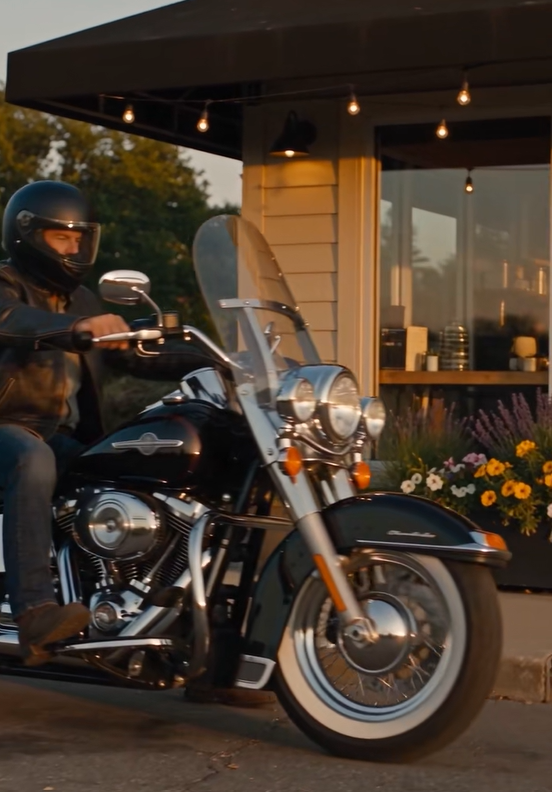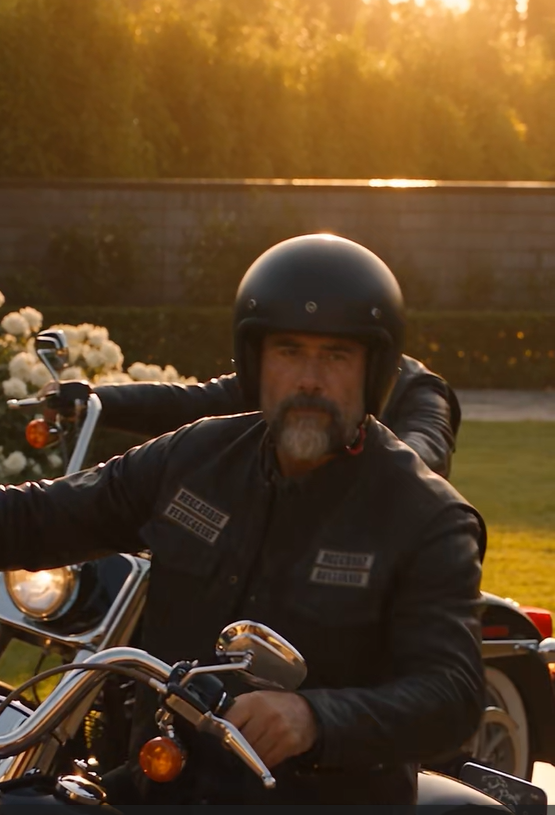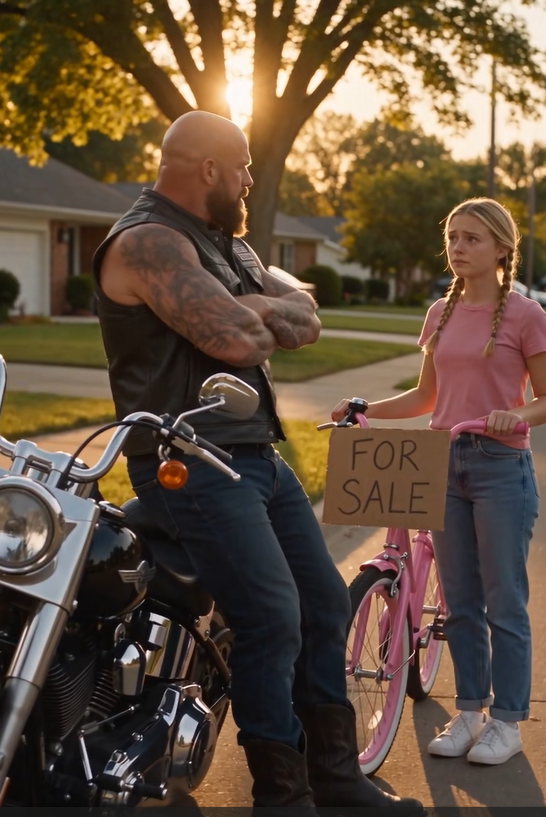
On a quiet street, almost no one paid attention to the young woman in a pink T-shirt standing beside a bright pink bicycle. Hanging from the handlebars was a simple cardboard sign with two words: “FOR SALE.” At first glance, there was nothing unusual about it—someone had simply decided to sell an old possession. But a man on a large motorcycle noticed something different. The young woman ran her hand over the handlebars several times, almost as if she were saying goodbye to the bike, and whenever someone stopped nearby, she suddenly looked away. The biker parked a short distance away and watched her for a few more seconds. He was already about to leave when he noticed one small detail that made him turn off the engine and walk over. “Why would someone sell something they clearly don’t want to let go of?” he asked calmly. The young woman looked at him but didn’t answer at first.
She clearly hadn’t expected anyone to start a conversation. The bicycle wasn’t new: there were small scratches on the frame, the grips were slightly worn, and the tires carried the marks of countless rides. But from the way she held it, it was obvious that to her, it was worth far more than the amount written on the cardboard sign. The biker asked how long she had owned it. For the first time during their conversation, she smiled and quietly said, “For many years.” She had ridden that bike to work, met friends on it, and once even crossed half the city because she didn’t want to be late for an important meeting. “Then why are you selling it?” the man asked, surprised. Her smile immediately disappeared. She stayed silent for a moment, as if deciding whether she should tell a complete stranger the truth.
Finally, the young woman admitted that the past few weeks had been difficult for her family. Unexpected expenses had appeared, money had become tight, and she had decided to sell some of her belongings. The bicycle was the most valuable thing she could sell quickly. “It’s only a thing,” she said, but her voice revealed that she felt very differently. The biker looked at the sign, then at the bicycle, and asked how much she wanted for it. She named a modest amount. The man took out his wallet. She immediately reached for the sign, preparing to remove it and hand him the bicycle, but he stopped her with a gesture. “I’m not buying it,” he said. The young woman frowned, thinking he had simply changed his mind.
But then the biker held out the money to her. She instinctively looked at the bills, then back at him. “I can’t take this,” she said. “You can,” he replied calmly. She tried again to explain that if he gave her the money, then the bicycle should belong to him, but the man simply shook his head. He told her that years ago, he had found himself in a situation where he had to choose between things that meant a lot to him and responsibilities that mattered even more. Back then, a complete stranger had helped him without asking for anything in return. He had remembered that moment for years, but he was never able to find that person again. “Maybe today it’s simply my turn,” the biker said. The young woman stood there silently, clutching the money in one hand and the bicycle’s handlebars in the other.
The man was already walking back toward his motorcycle when the young woman called after him and asked, “How can I ever pay you back?” He stopped but didn’t turn around immediately. Then he looked over his shoulder and answered: “Not to me. Someday you’ll see someone who needs it more than you do. When that happens, just do the same thing.” The young woman removed the cardboard sign from her bicycle and watched the biker disappear down the quiet street. That day, she thought she had simply saved her favorite bicycle. But years later, she realized that the stranger had left her something far more important than money—or even the chance to keep something she loved. He had passed on a promise that one day she would have to fulfill. And eventually, that day truly came.